Memory & keepsakes
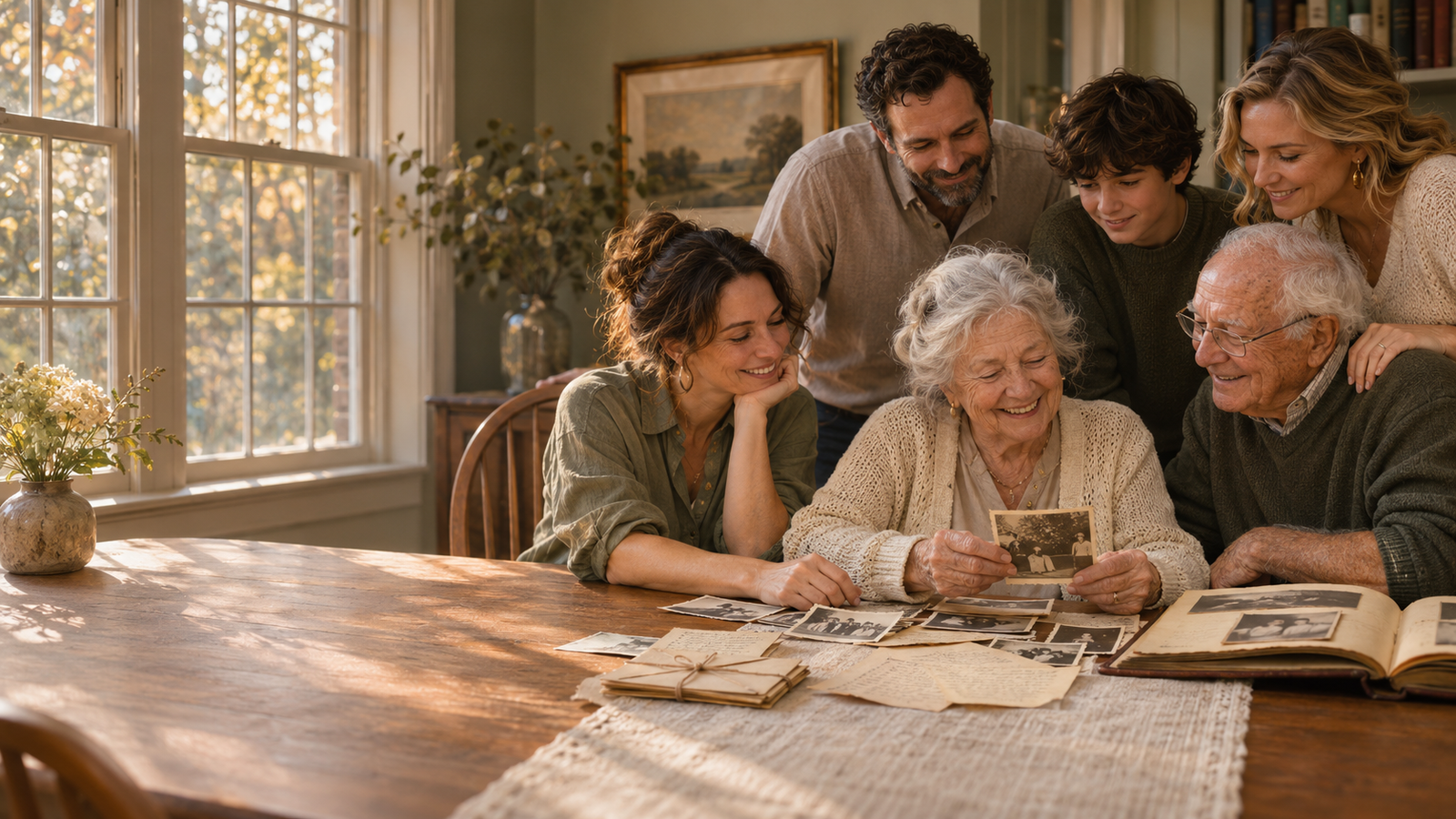
The names written on the back of every photograph
In a box of fading prints, a grandmother’s careful handwriting turned unfamiliar faces into a family map.
Try the photo questions →Stories live in the details people choose to remember: a journey, a keepsake, a familiar voice, or the first time a family felt at home.
Browse by the thread that draws you in. Each story is a starting point for your own conversations.
In a box of fading prints, a grandmother’s careful handwriting turned unfamiliar faces into a family map.
Try the photo questions →A few practical belongings traveled with one family. The stories attached to them made the distance easier to explain.
Ask about family journeys →The meal changed over the years, but the invitation stayed the same: bring a chair, bring a story, come hungry.
Explore food traditions →A family story does not have to be polished to matter. The pauses, uncertain dates, and different recollections help show how memory works. Write down what each person remembers in their own words, and ask whether they are comfortable with the story being shared beyond the family.
Use the storytelling guide →